
Glittering Sea and Yoshida Hiroshi
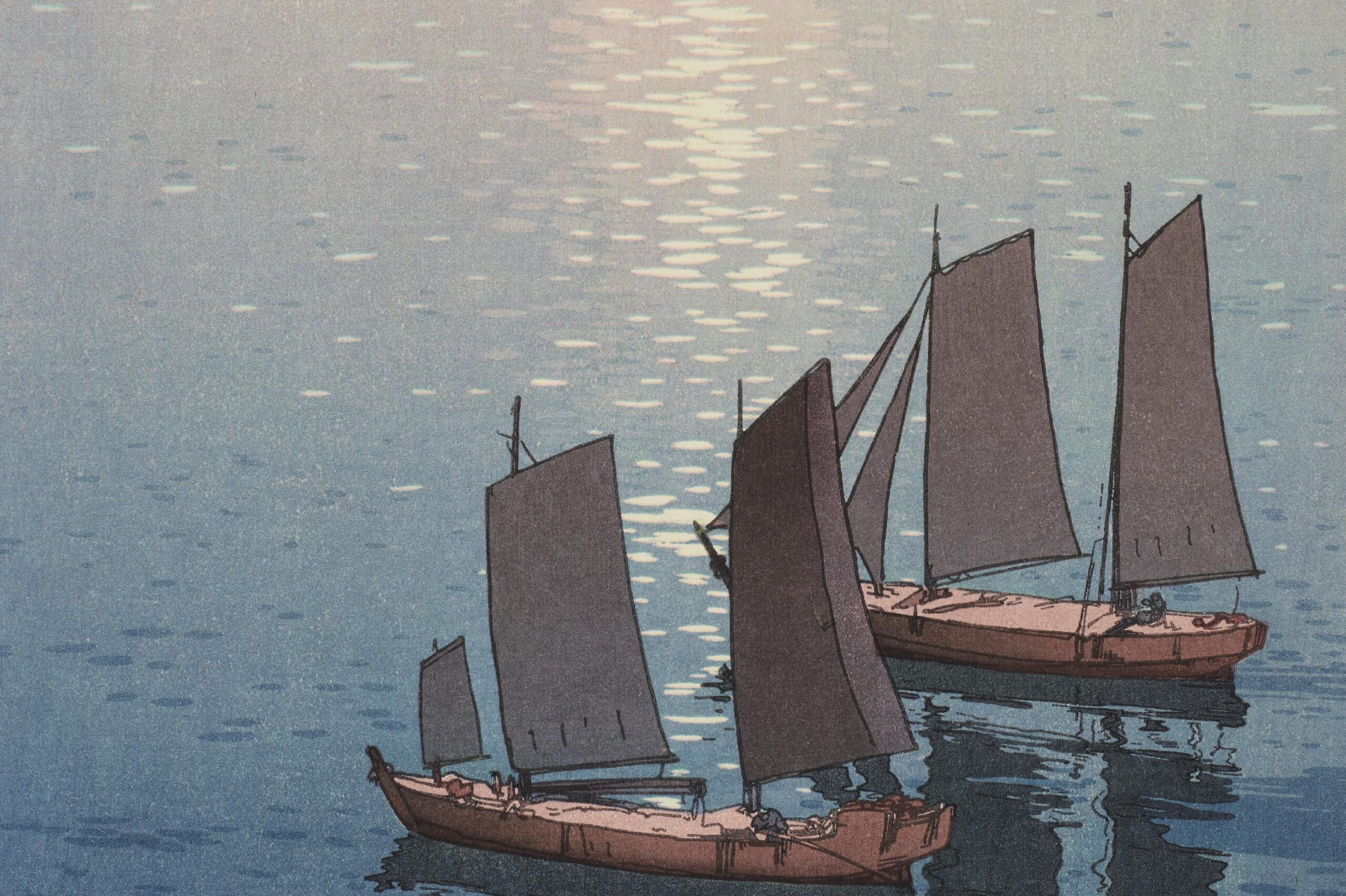
Overview
Yoshida Hiroshi (1876–1950) was a leading figure in Japan’s modern landscape painting. Having great affinity with Nature, he endeavored to convey the ultimate beauty to be found in the natural domain. To him, it was a mission as an artist to communicate the beauty to those who were unable to be there to directly appreciate it.
Most of his work derives from his first-hand observations through his extensive field trips in Japan as well as in other parts of the world.
Yoshida started working on woodblock prints at a later stage of his career. He was successful in developing a new style by integrating the traditional ukiyoe-style techniques with the elements of Western arts, such as oil painting textures and watercolor palettes.
This exhibition curates approximately 70 of his masterpieces, including the Inland Sea Series which brilliantly captures the flux of time through the sea view. The United States and Europe Series comprise depiction of iconic locations, compiled over 7 years of his voyages abroad. The exhibition also presents the museum’s original digital imagery that reproduces the depicted landscapes in the contemporary real world.
Highlights
1. A contrast between Yoshida’s landscapes and modern real-world views
The museum team has produced a set of digital and photographic counterparts, showing the locations depicted in Yoshida’s prints. This offers a unique reference point that adds a temporal dimension to appreciating the intricacy of his work.
2. Yoshida Hiroshi’s masterpieces of world landscapes
The curation includes his first private woodblock print album The United States Series, alluring variations of impressions of the “Sailing Boats” from the The Inland Sea Series, and more.
3. Original high-resolution digital features
Yoshida’s woodblock prints are characterized by the extraordinary numbers of layers. Thirty blocks on average and as many as one hundred, this painstaking process of printing one layer on top of another culminates in the vibrant chromatic rendering, enhancing the sense of texture, depth and airiness which Yoshida perceived in the scenes of nature.
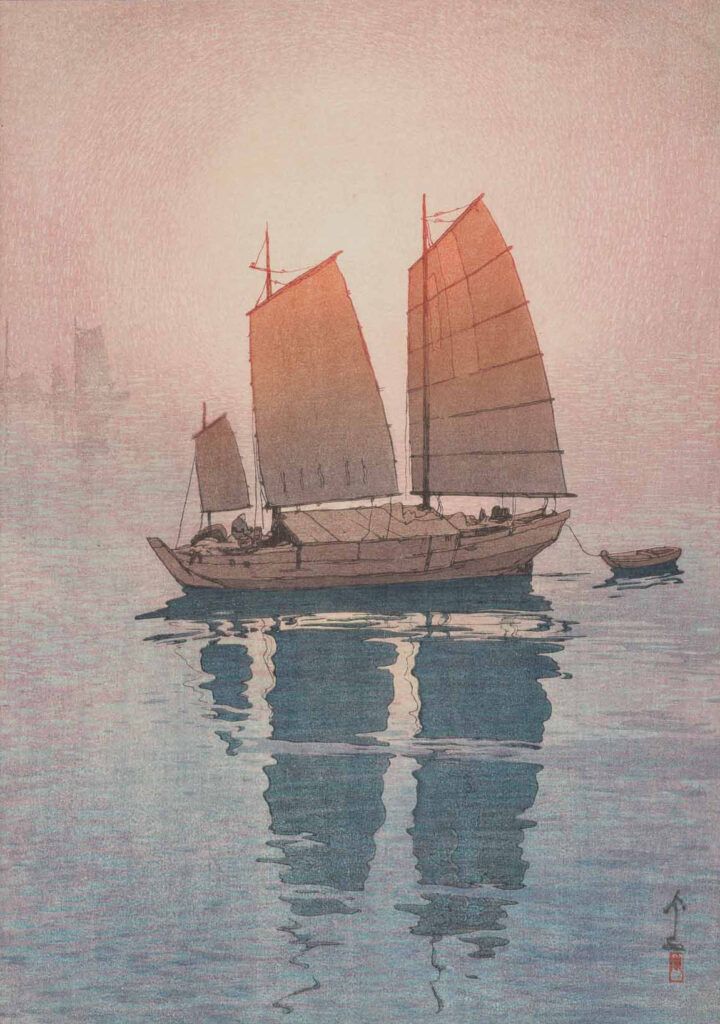
SAILING BOATS: Morning, from The Inland Sea Series, 1926
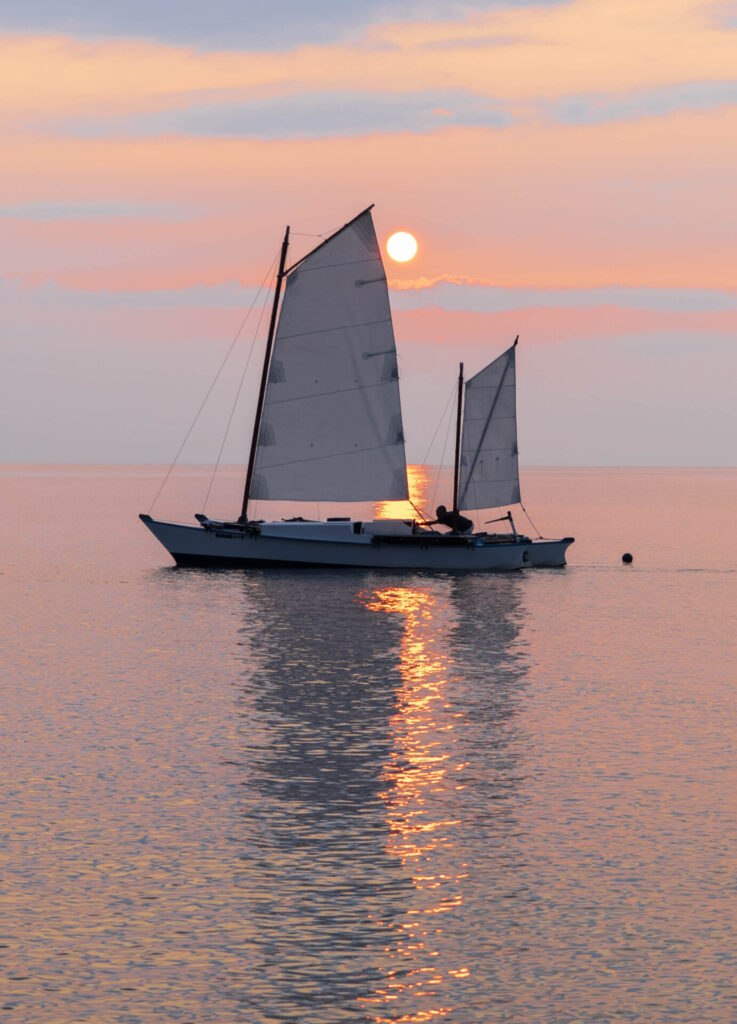
Sailing boats today (photographed 2025)
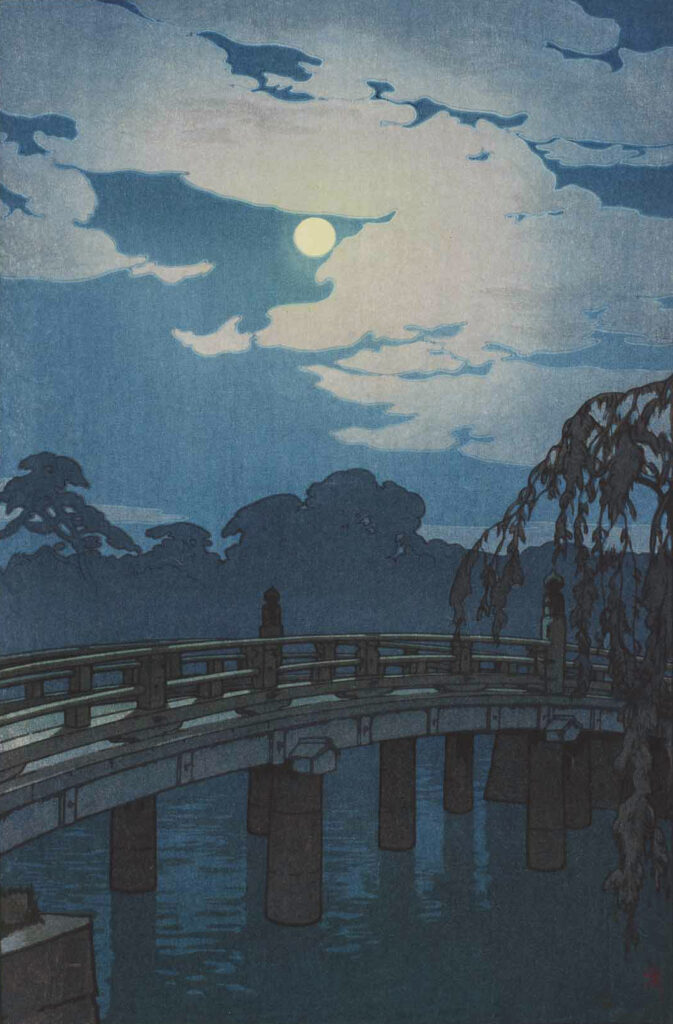
Hirakawabashi Bridge, from The Twelve Scenes of Tokyo, 1929
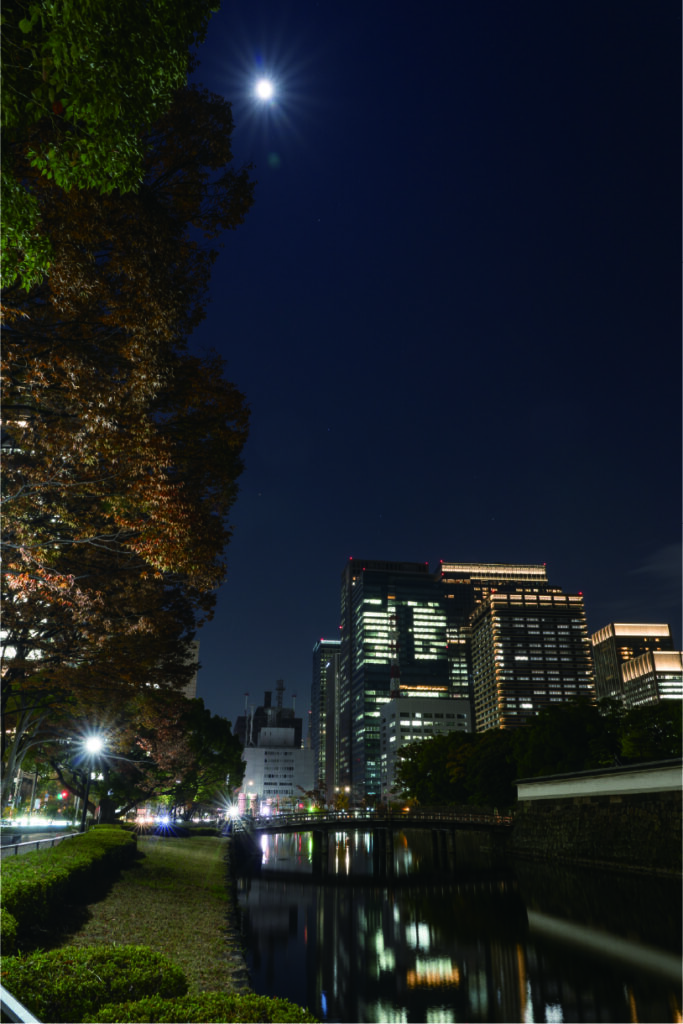
Hirakawabashi bridge (photographed 2023)
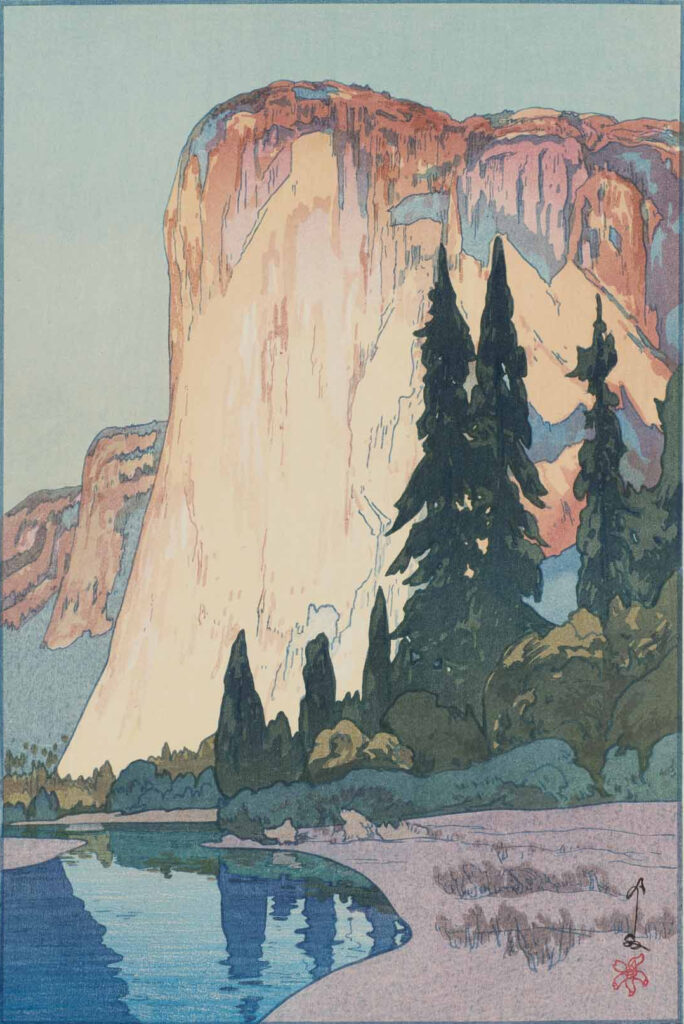
EL CAPITAN, from The United States Series, Yoshida Hiroshi, 1925
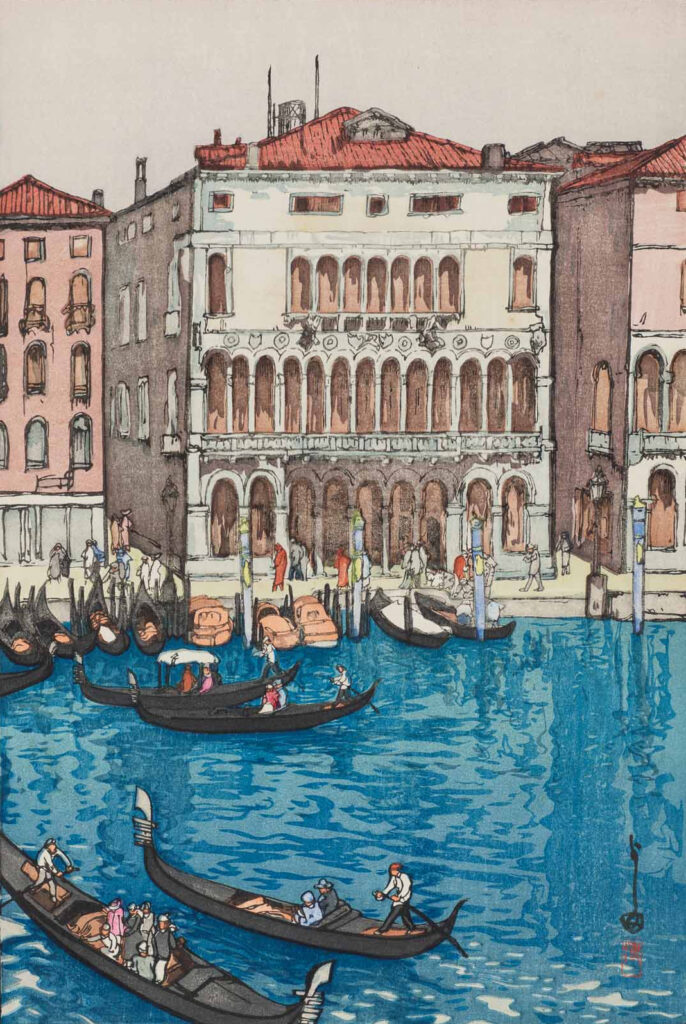
CANAL IN VENICE, from the Europe Series, Yoshida Hiroshi, 1926
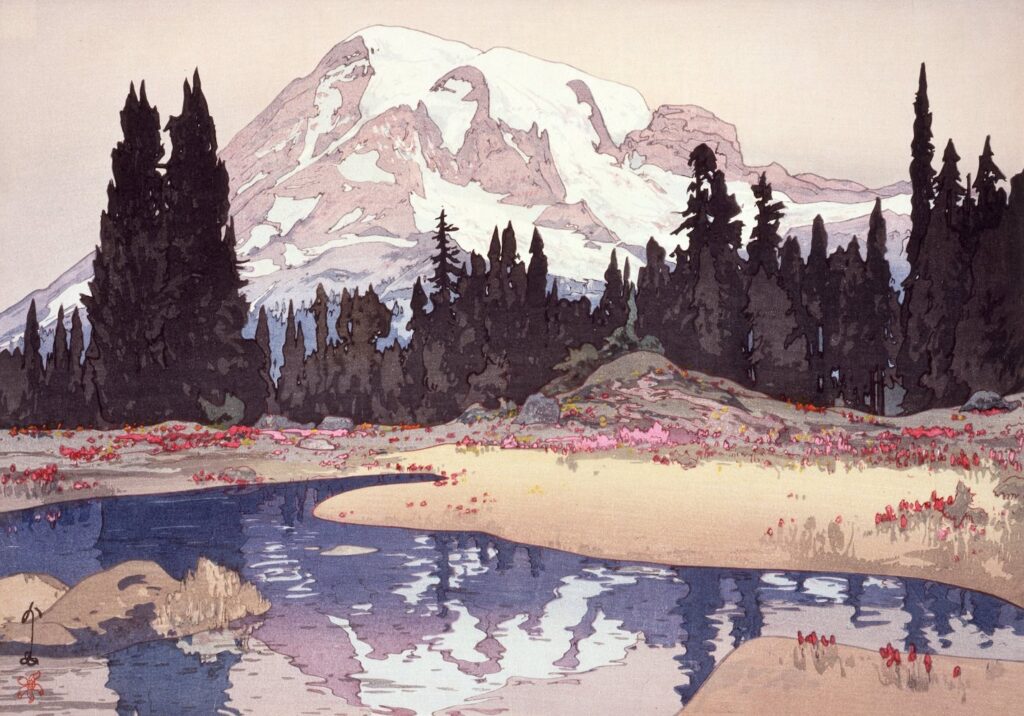
MOUNT RAINIER, from The United States Series, 1925
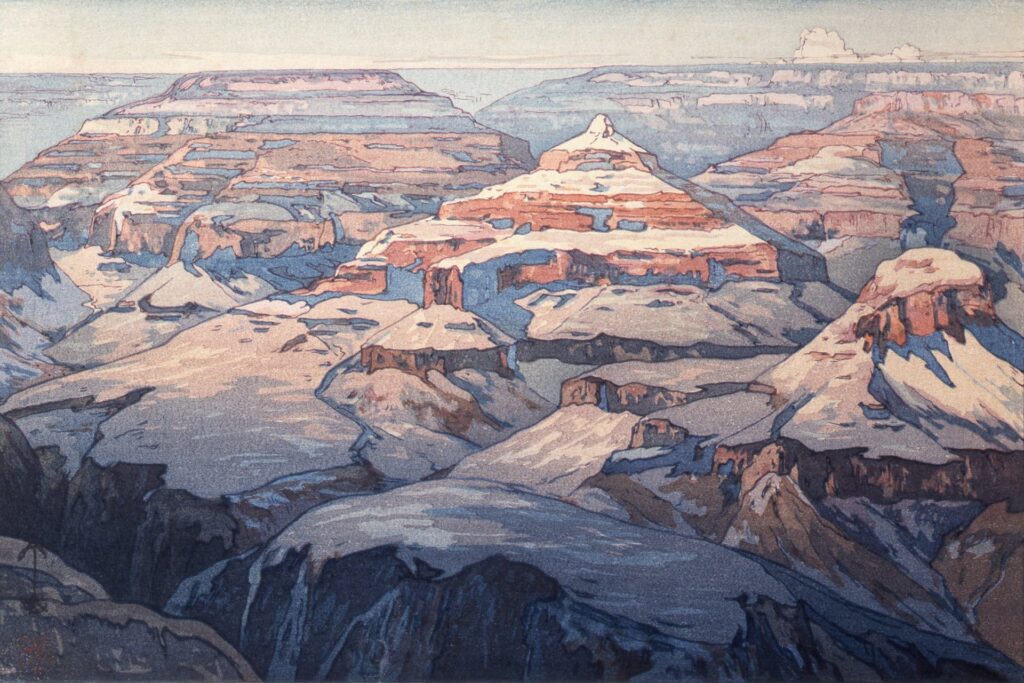
THE GRAND CANYON, from The United States Series, 1925
SAILING BOATS: Morning, from The Inland Sea Series, 1926
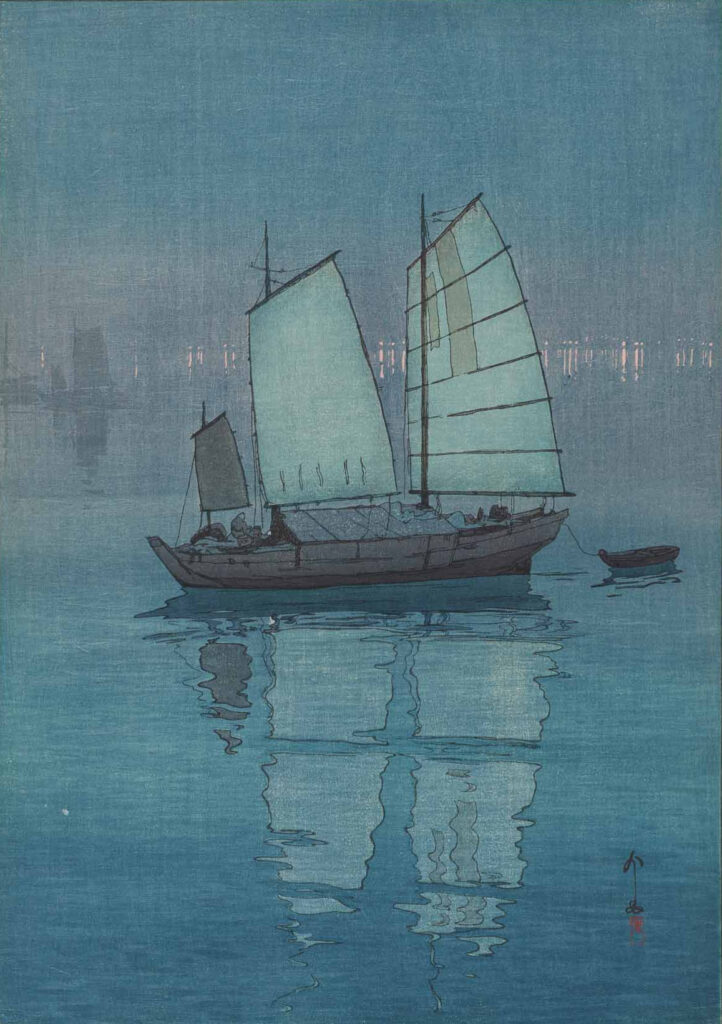
SAILING BOATS: Night, from The Inland Sea Series, 1926
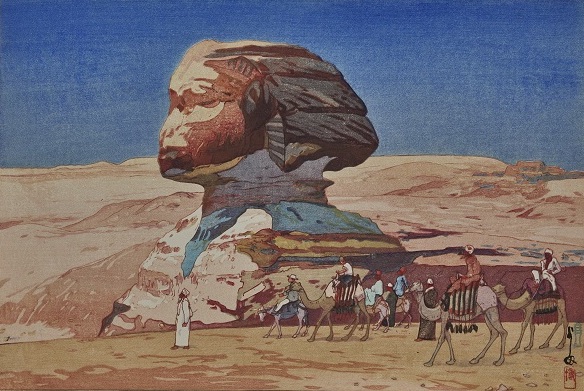
SPHINX, from the Europe Series, Yoshida Hiroshi, 1925
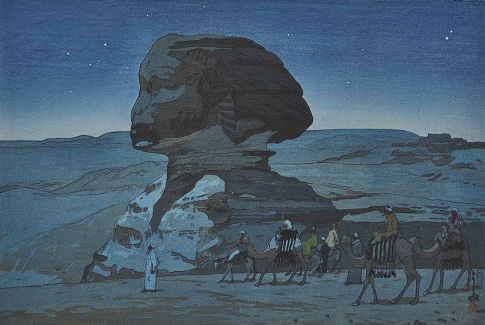
SPHINX: Night, from the Europe Series, Yoshida Hiroshi, 1925
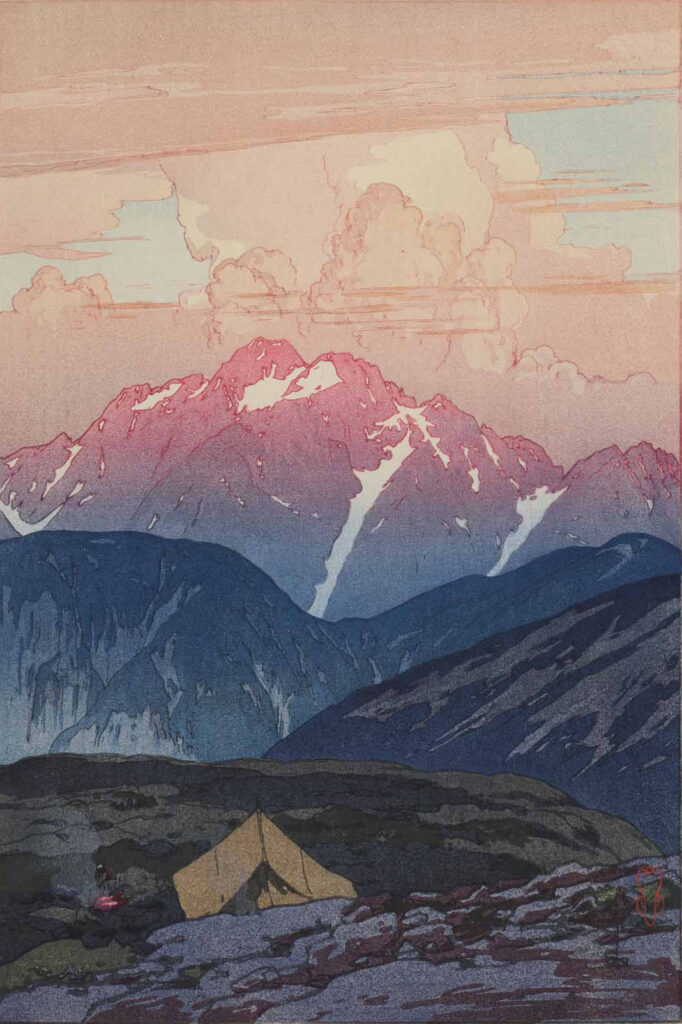
Tsurugizan: Morning, from the Twelve Scenes in the Japan Alps, Yoshida Hiroshi, 1926
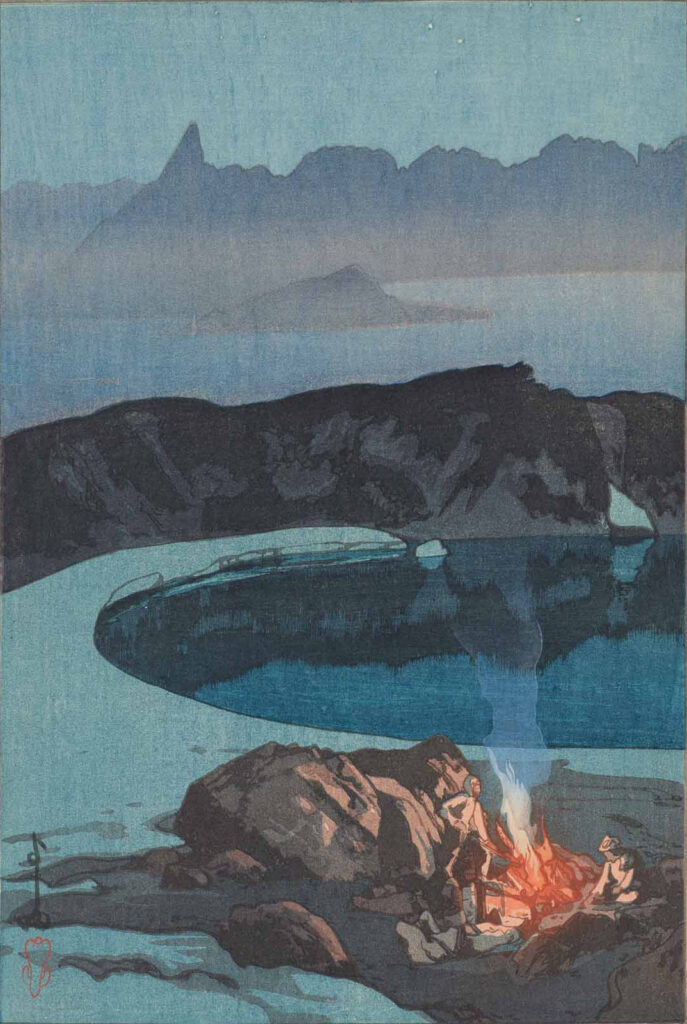
Tsurugizan: Camping at Mt. Washibadake, from the Twelve Scenes in the Japan Alps, Yoshida Hiroshi, 1926
Yoshida Hiroshi the artist
Yoshida Hiroshi (1876–1950) was the second son of a feudal samurai, Ueda Tsukane, in the city of Kurume, Fukuoka. He moved to Tokyo at the age of 17 and enrolled at Fudosha, an art school run by Koyama Shōtarō (1957–1916). In 1899, 23-year-old Yoshida decided to travel to North America with his watercolor paintings and the little money he had, taking his younger colleague Nakagawa Hachirō as a companion. He exhibited at the Detroit Institute of Arts (then Detroit Museum of Art) and other galleries, making a significant sale of his work. Having earned sufficient funds, he extended the voyage to Europe before returning to Japan two years later. In 1903, he revisited the USA, this time with his foster sister and future wife, Fujio. They spent the subsequent three years traveling in America as well as in Europe. The exposure to traditional as well as contemporary Western art inspired him to a great extent, from which he derived a motivation to improve his drawing skills. He later became a founding member of the association of Western paintings Taiheiyo Painting Society. Yoshida was 44 when he met Watanabe Shozaburo, an art publisher, who published his first woodblock print, entitled The Sacred Garden in Meiji Shrine. The catastrophic earthquake of 1923 devastated Tokyo, and Yoshida decided to travel to America once again to raise a fund by selling his works to help the artists who fell victim to the disaster. During this trip, he recognized the immense popularity Japanese woodblock was enjoying in this country. He felt the need to develop a new style by incorporating Western realism into the traditional Japanese woodblocks. He returned to Japan in 1925 and published a woodblock collection. He was 49, and this was his first foray to oversee the entire process of production. His new passion for woodcut drove him to printmaking in the following years with as much enthusiasm as he had for oil painting.