


Exhibitions
#RINPA
2021.09.10(Fri) - 2021.10.26(Tue)
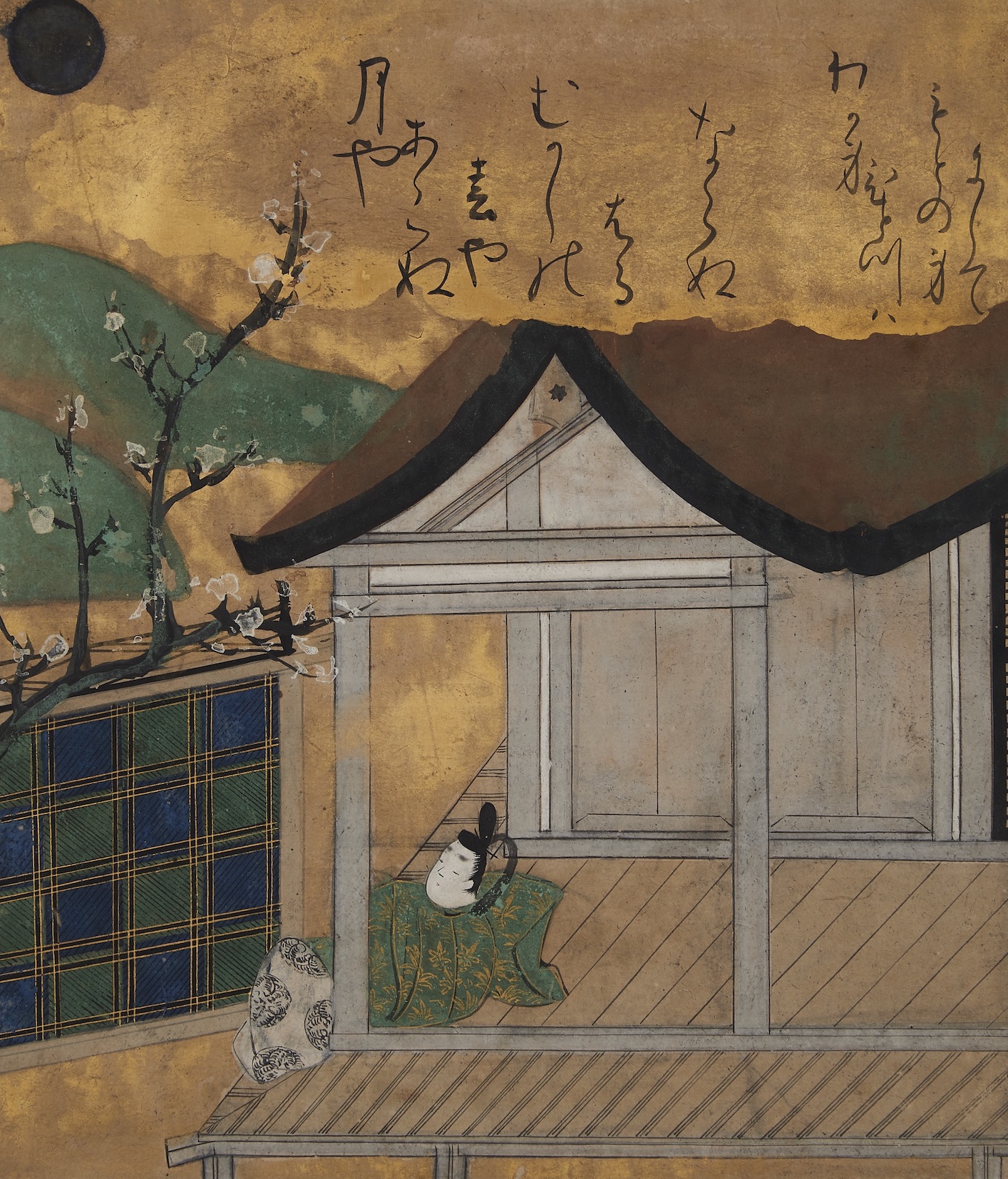
Overview
Hash tag (#) has become a universally recognized popular tool on a wide range of social media today. It is placed immediately before a keyword, and the tagged keyword allows social media users to easily find the information relevant to their interests. This exhibition, #RINPA (hashtag RINPA), carries the idea of sharing information about the profound aesthetics underlying the artworks that belong to this tradition of art.
We bring together various media to enrich your visit—curator’s Rinpa tidbits on social media, digital curator in the galleries, and so on, to accompany the exhibits.
A special event is organized, too, at the Museum’s Noh Theater, presented by Ryo Inoue, a pop artist with his unique approach to fine arts and world’s masterpieces.
Come and discover the intriguing details of one of the most prominent strands of Japanese art.
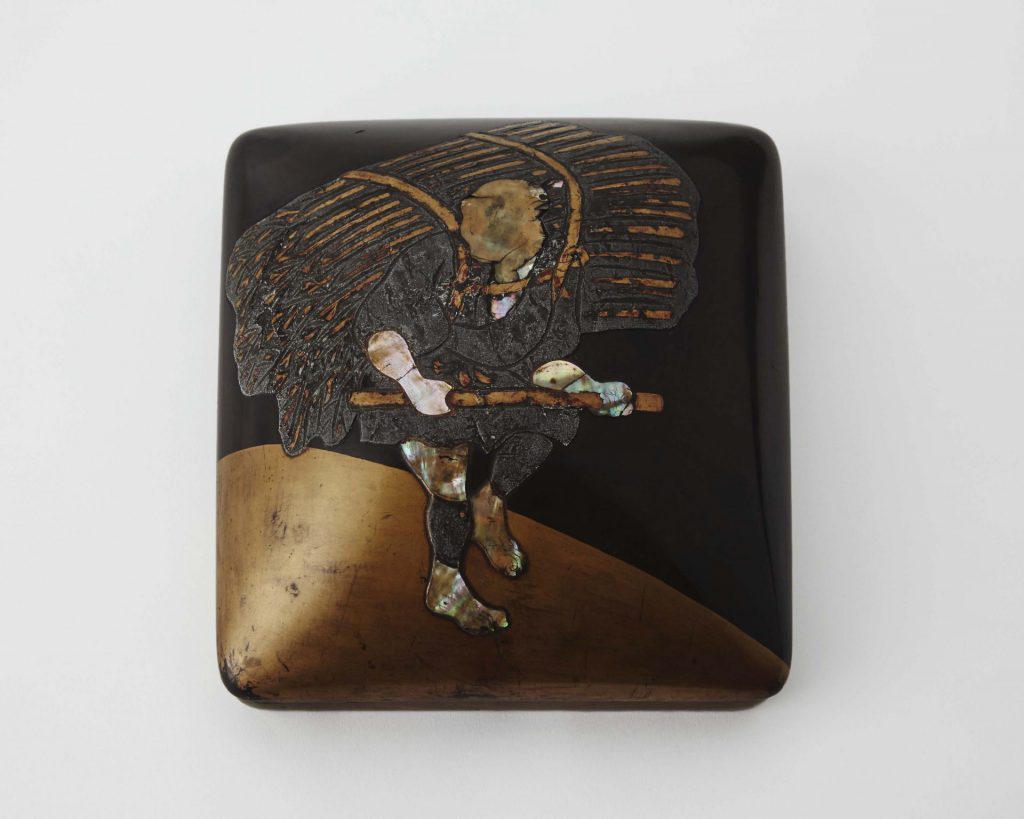
Writing Box with design of woodcutter in mother-of-pearl inlay and makie,
attributed to Hon’ami Kōetsu (Important Cultural Property)
Momoyama to Edo period, 17th century
This wooden box for keeping writing utensils is in the style known as fukurogata, or “bag-like style,” for its raised top cover and rounded corners. A water container and inkstone are embedded on the left, and the brush compartment and a carved cutter knife casing are arranged to the right. The top cover is finished in black urushi (lacquer) and decorated with an inlaid woodcutter, carrying firewood on his back. Inside the lid and the main box are decorated with makie in gold and inlay, depicting mountain hills with motifs such as bracken ferns and dandelions. The woodcutter is believed to be likened to Ōtomo no Kuronushi, an ancient Japanese poet and one of the Six Poetic Geniuses. The skillful rendition of the woodcutter, depicted animatedly, and the excellent stylization of the plants parallel the quality found in the drawing in gold and silver dye by Kōetsu and Tawaraya Sōtatsu. The generous use of materials and the extraordinary structural design strongly suggest close involvement of this leading designer of the time. Provenance: Hara Sankei
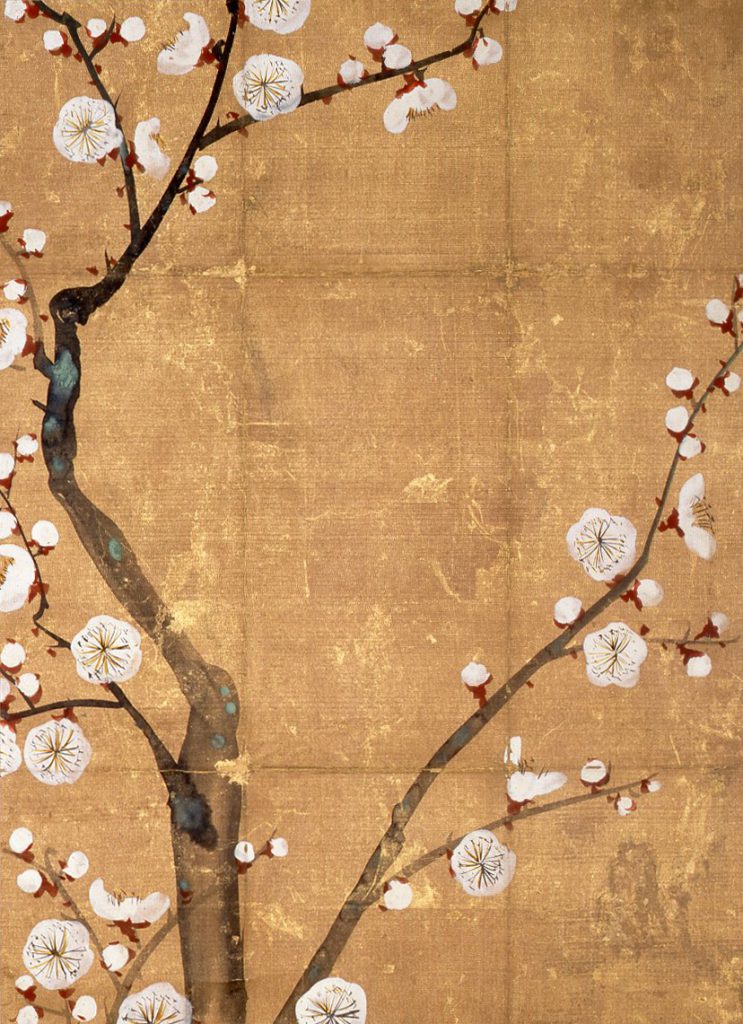
Incense wrapping paper with design of white plum, Ogata Kōrin
Edo period, 18th century
There are several extant pieces of incense wrapping paper designed by Ogata Kōrin. These are silk fragments lined with gold leaf. This paper bears Kōrin’s household-name design of plum, depicted with petals indistinguishable from one another. The incense wrapping paper was used by placing the incense in the middle and folding the four sides in. Thus, the design is composed in such a way as to avoid the middle section, which will be covered up when the paper is folded. Two branches, stretching upward, are embellished with buds and flowers, A beautiful rendition of a spring image against the gold backdrop.
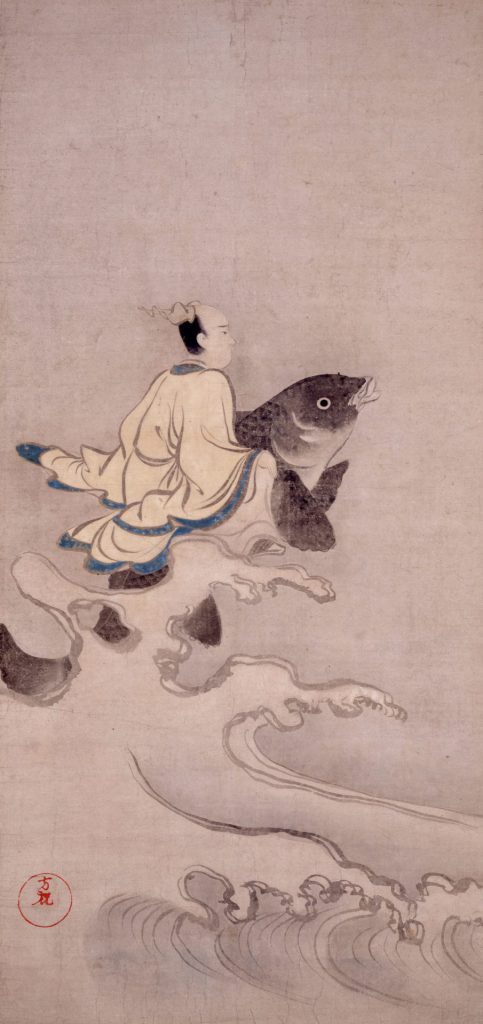 The Immortal Qin Qao, Ogata Kōrin
Edo period, 18th century
Hermit Qin Qao from Zhao state of the Zhou dynasty China was known to be an excellent zheng player. The legend holds that he promised to catch a dragon in a pond and, on the day of promised delivery, emerged from the water, riding a giant carp. A perfect balance between the stillness and dynamism is one of the outstanding qualities of this composition, expressed in the highly refined, stable brushwork for Qin Qao’s figure against the kinetic expression of the water. This painting is included in Kōrin Hyakuzu (One hundred illustrations by Kōrin) edited by Sakai Hōitsu. This is an illustrative example of the artistic prowess of this highly accomplished and multi-talented artist, attained as a result of mastering diverse traditions of painting.
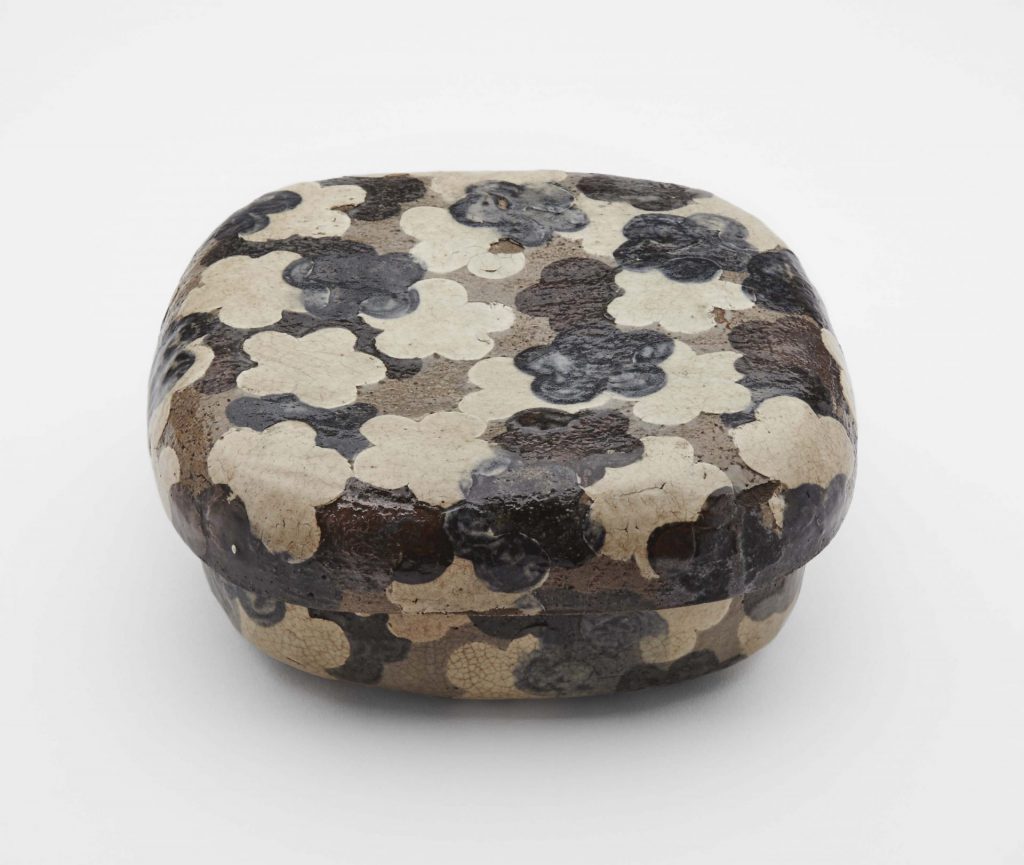 Covered box with design of plum blossoms, Ogata Kenzan
Edo period, 18th century
Ogata Kenzan created his own style of pottery so unique that it defied the characteristics of Kyoto Ware, which represented his technical roots. Wild plants and flowers, such as chrysanthemum, Chinese bellflower, silver grass, sasa bamboo, and willow, as well as birds and legendary figures were often the source of inspiration. This box has a lift off lid and is decorated entirely with stylized plum flowers, which is applied using a traditional technique of textile dyeing using paper patterns—something he would be familiar with as a son of a prominent textile merchant of Kyoto. The pattern paper was used to lay out the white flowers, followed by dark flower motifs brush-painted in cobalt oxide and iron pigments, then treated with a transparent glaze before firing. Inside, white flowers are formed by painting cobalt oxide over pattern paper to show the prime layer in white. The vessel elegantly embodies the tasteful aesthetics both in its shape and design. This masterpiece of Kenzan bears his name written in large letters on the back of the base, using iron pigments. Provenance: the Konoike clan